How to Find the Right Japanese Partner: What Matters More Than Company Size
Real distribution, product expertise, creditworthiness and follow-through matter more than a famous name
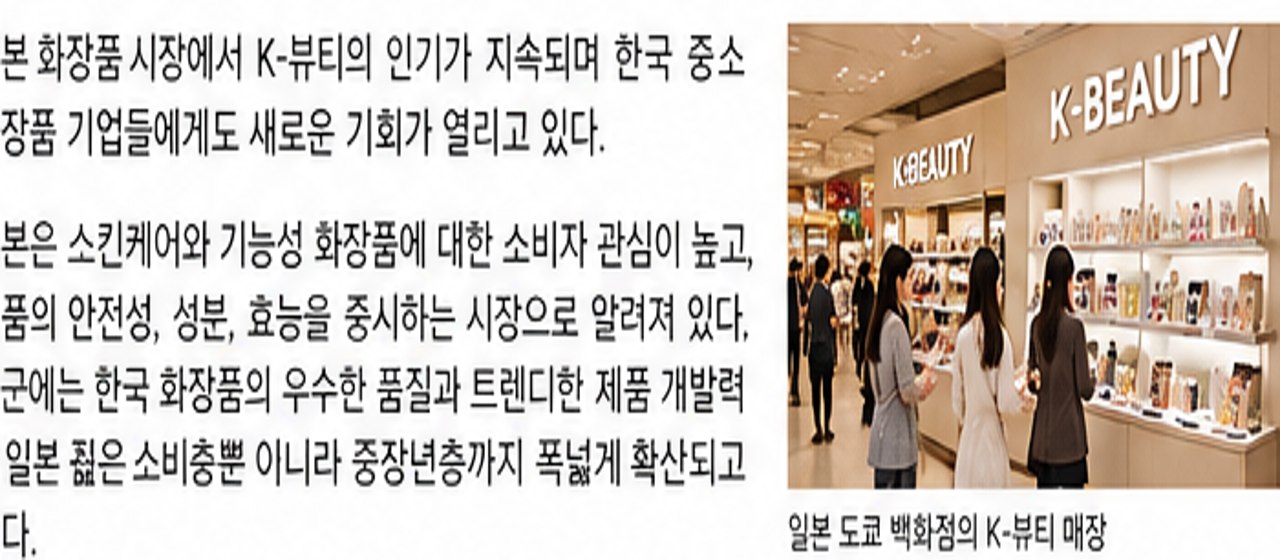
Illustrative image
Big companies are not always the right partners
Korean SMEs often pursue well-known Japanese trading houses. Yet size does not guarantee that a company will devote sales resources to a particular product. A specialist importer or regional wholesaler with direct access to target customers can be more effective. Assess the people, channels and resources assigned to your product, not just corporate reputation.
First, verify actual sales channels
Broad claims of nationwide connections are not enough. Ask about product categories, shareable sales references, retail channels, logistics capabilities and how recent launches were handled. Food importers should know food retailers and grocery e-commerce; cosmetics partners may need drugstore and beauty-channel experience.
Second, look for product insight and a concrete plan
A capable partner discusses competing brands, expected retail prices, target customers, packaging changes and launch steps rather than merely praising the product. Demand in Korea is not proof of demand in Japan. Pilot sales and customer feedback should lead to practical improvements.
Third, check legal identity separately from financial strength
Japan’s National Tax Agency Corporate Number Publication Site provides basic corporate-name, address and number information. Where appropriate, also verify registration, signatory authority, transaction history, finances and credit. An existing corporation is not necessarily able to pay on time. Confirm that bank details match the contractual counterparty.
Fourth, identify decision-makers and communication practices
Notice whether questions receive clear answers and deadlines are respected. Internal approvals can take time, but the responsible contact and next steps should be clear. Be cautious when a potential partner requests exclusive nationwide rights without presenting an actionable sales plan.
Fifth, test the relationship before exclusivity
Samples, small orders and limited retail tests provide evidence of actual sales ability. If exclusivity is justified, limit it by product, territory and duration; define minimum purchases, targets, trademark use, online rights and termination. Review governing law and dispute resolution in the contract.
Sixth, check compliance and after-sales capacity
Food products may require import notifications and ingredient reviews. Cosmetics face Japanese licensing and distribution requirements. Fitness equipment and building materials may require installation, spare parts and service support. Confirm relevant experience and access to qualified specialists.
The Korean supplier must also be a good partner
Accurate specifications and quotations, reliable delivery, advance notice of changes and a complaint-handling process are essential on the Korean side. Agree on marketing responsibilities, access to sales data and product improvements rather than simply demanding distribution coverage.
Execution is the ultimate test
The strongest Japanese partner is not automatically the biggest: it is the one that understands the product, actively sells it and fulfills commitments. Verify a real plan and small-scale results before granting far-reaching rights.
References: Japan National Tax Agency, MHLW and Japan Customs guidance. Check product-specific rules before trading.