Japanese Food Labels: Ingredients, Allergens and Date Marking
Japan expanded its mandatory allergen list in April 2026—check before printing
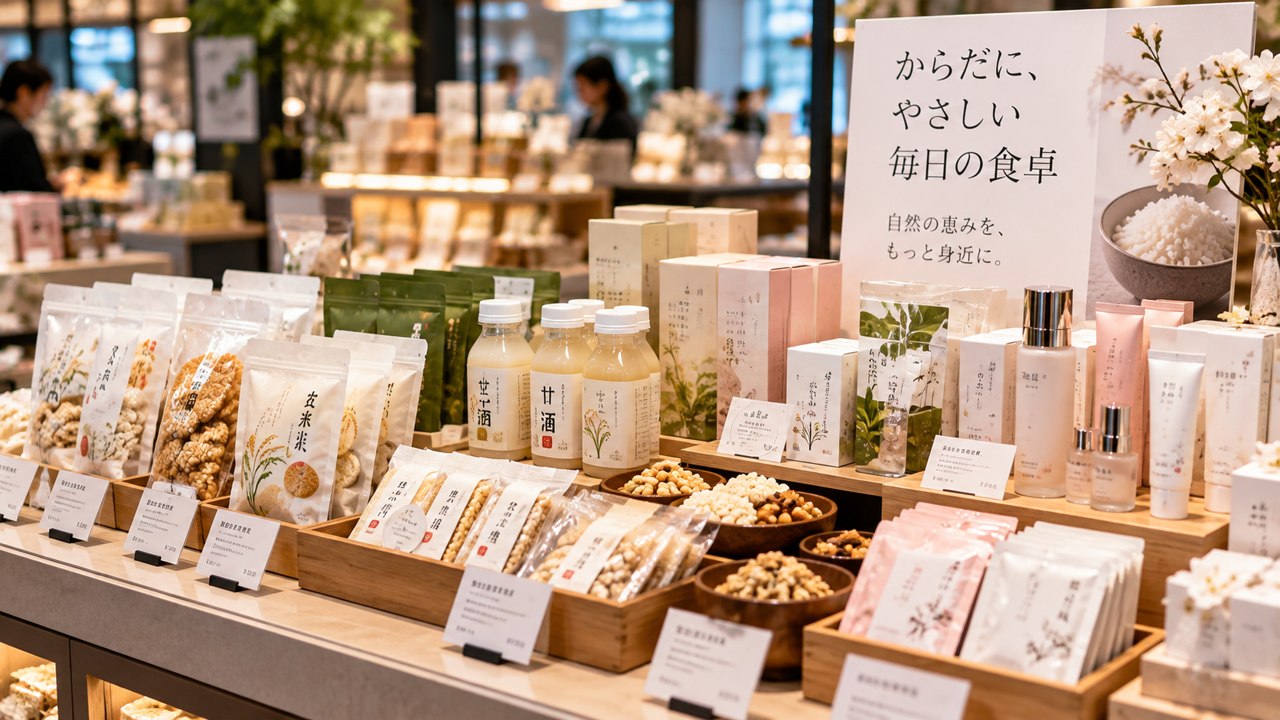
Illustrative image
A good product still needs a compliant label
For Korean food exporters, Japanese labeling is a central part of market access, not merely a translation task. Ingredients, allergens, date marking, storage requirements and importer information must be checked against Japan’s food labeling standards before a package is printed.
1. Build ingredient statements from actual formulas
Verify every ingredient, compound ingredient and additive with manufacturing records and suppliers. Marketing copy is not a reliable source for regulatory ingredients lists. Changes in recipes or manufacturers should trigger a fresh review of the label.
2. Japan changed its mandatory allergen list in 2026
On April 1, 2026, Japan’s Consumer Affairs Agency added cashew nuts to the mandatory specified-ingredient list. As of October 2026, the nine specified ingredients are shrimp, crab, walnuts, wheat, buckwheat, eggs, milk, peanuts and cashew nuts. Pistachios were added to the recommended-labeling group. Companies should not rely on outdated checklists listing only eight mandatory ingredients.
3. Check allergens inside compound ingredients
Flavoring blends, chocolate coatings and sauce bases can contain allergens not apparent from a product name. Seek allergen declarations from ingredient suppliers and give the importer full, current documentation.
4. Use-by and best-before are not interchangeable
Japan distinguishes use-by dates, primarily tied to safety, from best-before dates that indicate expected quality. The appropriate expression depends on the food. Set dates using relevant shelf-life evidence, unopened-pack assumptions and storage temperatures instead of translating a Korean date mechanically.
5. Align dates with real storage conditions
If a product was tested for refrigerated storage, room-temperature logistics may invalidate the assumptions. Manufacturers and importers should agree on cold-chain needs and the remaining shelf life available in Japan.
6. Identify the product and responsible importer
Applicable Japanese labeling details may include the product name, net quantity, origin country and Japanese importer’s name and address. Confirm the legal entity and its address before printing a large run of packaging.
7. Check nutrition and ingredient-origin rules
Nutrition facts are required for many consumer packaged processed foods, while ingredient-origin labeling has its own rules and exceptions. Apply the relevant category-specific standards rather than assuming one template fits every food.
8. Avoid unsupported health claims
Do not present an ordinary food as a treatment or imply it is an authorized functional-claim food without meeting applicable requirements. Marketing claims acceptable in Korea may need revision for Japan.
Before the final print run
Obtain current recipes and allergen declarations; confirm date-setting evidence; agree on the Japanese importer and label owner; prepare a Japanese draft; verify it against the physical goods; seek specialist review when necessary; and test readability before mass printing.
Labels are a promise to consumers
An accurate label is both a legal responsibility and a foundation of trust. One overlooked ingredient or allergen can harm consumers and disrupt a promising export relationship.
Official references: Consumer Affairs Agency food labeling · CAA 2026 allergen updates. Requirements depend on product classification and should be reconfirmed before trade.